Welcome to the fascinating world of materials science, where even the most overlooked elements reveal extraordinary secrets. Today, we dive deep into the leads melting point—a deceptively simple concept with far-reaching implications in industry, safety, and environmental science.
Understanding the Basics of Leads Melting Point

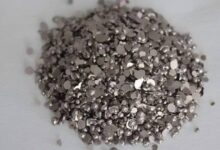
The term ‘leads melting point’ refers to the specific temperature at which metallic lead transitions from a solid to a liquid state. This fundamental physical property is crucial for applications ranging from metallurgy to electronics manufacturing. Unlike many metals, lead has a relatively low melting point, making it both useful and hazardous depending on the context.
What Is the Exact Leads Melting Point?
The scientifically accepted leads melting point is 327.5°C (621.5°F). This value has been consistently verified through experimental measurements and is listed in authoritative databases such as the WebElements periodic table. At this temperature, the crystalline lattice of solid lead breaks down, allowing atoms to flow freely in the liquid phase.
- Lead melts at 327.5°C under standard atmospheric pressure (1 atm).
- This is significantly lower than iron (1538°C) or copper (1085°C).
- The low leads melting point makes it ideal for low-temperature casting processes.
Why Is the Leads Melting Point Important?
The leads melting point isn’t just a number in a textbook—it plays a vital role in industrial safety, material selection, and environmental regulations. Because lead melts at a relatively low temperature, it can be easily processed without requiring high-energy furnaces. However, this also means that accidental melting can occur during fires or improper handling, releasing toxic fumes.
“The low melting point of lead has historically made it a go-to material for plumbing and soldering, but its toxicity has led to a reevaluation of its use in modern applications.” — Materials Science Journal, 2022
Historical Significance of the Leads Melting Point
Lead has been used by humans for over 9,000 years, and understanding its leads melting point was key to its widespread adoption in ancient civilizations. From Roman aqueducts to medieval stained glass, the ability to melt and shape lead gave early engineers a versatile construction material.
Lead in Ancient Civilizations
The Romans were among the first to exploit the leads melting point for large-scale infrastructure. They used molten lead to seal water pipes and construct drainage systems. Archaeological evidence shows that Roman foundries operated at temperatures sufficient to reach the leads melting point, using charcoal-fired furnaces.
- Roman lead pipes (fistulae) were cast using techniques that relied on precise temperature control near the leads melting point.
- Lead was also used in coffins, weights, and even cosmetics—despite early signs of toxicity.
- The ease of melting lead contributed to its overuse, possibly contributing to lead poisoning in elite Roman society.
Industrial Revolution and the Rise of Lead Processing
During the 18th and 19th centuries, the leads melting point became central to industrial manufacturing. Lead was used in printing presses (type metal), batteries, and ammunition. The ability to repeatedly melt and recast lead made it economically viable for mass production.
Factories began using reverberatory furnaces to maintain temperatures just above the leads melting point, minimizing fuel consumption while maximizing output. This period also saw the first documented cases of occupational lead poisoning among smelter workers.
Scientific Principles Behind the Leads Melting Point
To truly understand the leads melting point, we must examine the atomic and thermodynamic principles that govern phase transitions. Melting is not just a change in appearance—it’s a fundamental reorganization of atomic structure driven by energy input.
Atomic Structure and Bonding in Lead
Lead (Pb) is a post-transition metal with an atomic number of 82. Its electron configuration ends in 6p², giving it relatively weak metallic bonding compared to transition metals. This weaker bonding is a primary reason why the leads melting point is lower than that of metals like iron or nickel.
- Lead has a face-centered cubic (FCC) crystal structure at room temperature.
- The metallic bonds in lead are less directional and weaker, requiring less thermal energy to break.
- Relativistic effects in heavy elements like lead also influence bond strength and melting behavior.
Thermodynamics of Melting
The leads melting point is determined by the balance between enthalpy (heat content) and entropy (disorder). At 327.5°C, the Gibbs free energy change (ΔG) for the solid-to-liquid transition becomes zero, meaning the two phases are in equilibrium.
The enthalpy of fusion for lead is approximately 4.77 kJ/mol, which is relatively low compared to other metals. This means less energy is required to melt a given amount of lead, reinforcing its utility in low-energy industrial processes.
“The thermodynamic stability of solid lead collapses at 327.5°C, marking the onset of fluidity and malleability essential for casting and alloying.” — Physical Chemistry of Metals, Oxford Press
Leads Melting Point in Industrial Applications
The practical value of knowing the leads melting point lies in its application across various industries. From electronics to construction, the ability to predict and control when lead melts ensures both efficiency and safety.
Soldering and Electronics Manufacturing
One of the most common uses of the leads melting point is in soldering. Traditional tin-lead solder (typically 60% tin, 40% lead) has a eutectic melting point of around 183°C, which is lower than pure lead due to alloying effects. This allows electronics manufacturers to join components without damaging heat-sensitive parts.
- Despite the RoHS (Restriction of Hazardous Substances) directive, lead-based solders are still used in aerospace and military applications due to their reliability.
- Understanding the leads melting point helps engineers design reflow soldering profiles that avoid overheating.
- Lead-free alternatives often require higher temperatures, increasing energy costs and thermal stress on components.
Battery Production and Recycling
Lead-acid batteries, widely used in vehicles and backup power systems, rely heavily on the leads melting point during manufacturing and recycling. Spent batteries are smelted at temperatures slightly above 327.5°C to recover lead from plates and terminals.
Modern recycling plants use advanced furnaces that precisely control temperature to minimize emissions. According to the U.S. Environmental Protection Agency, over 99% of lead from batteries is recycled, largely due to the ease of melting and purifying lead.
Environmental and Health Implications of the Leads Melting Point
While the leads melting point enables useful applications, it also poses serious health and environmental risks. When lead is heated to or beyond its melting point, it can release toxic fumes and particulates that are hazardous to humans and ecosystems.
Lead Fumes and Occupational Hazards
Heating lead near its melting point produces lead oxide fumes, which are easily inhaled and absorbed into the bloodstream. Workers in smelting, welding, and foundry operations are particularly at risk. Chronic exposure can lead to neurological damage, kidney failure, and reproductive issues.
- The Occupational Safety and Health Administration (OSHA) sets permissible exposure limits (PEL) for lead at 50 µg/m³ over an 8-hour shift.
- Proper ventilation and respiratory protection are mandatory in facilities where the leads melting point is routinely reached.
- Even brief exposure to molten lead fumes can cause acute symptoms like headaches and nausea.
Environmental Contamination from Melting Processes
Improper handling of molten lead can result in soil and water contamination. Runoff from recycling sites or illegal melting operations can introduce lead into ecosystems, where it bioaccumulates in plants and animals.
A study published in Environmental Science & Technology found that informal lead recycling in developing countries contributes significantly to childhood lead poisoning. The low leads melting point makes it accessible even with rudimentary equipment, increasing the risk of uncontrolled emissions.
“The accessibility of lead melting has turned informal recycling into a global public health crisis.” — World Health Organization Report on Lead Exposure, 2023
Measuring and Controlling the Leads Melting Point
Accurate measurement and control of the leads melting point are essential in both research and industry. Various techniques have been developed to monitor phase transitions with high precision.
Differential Scanning Calorimetry (DSC)
DSC is one of the most accurate methods for determining the leads melting point. It measures the heat flow into or out of a sample as it is heated, detecting the endothermic peak associated with melting. This technique can identify the exact temperature and enthalpy of fusion with high reproducibility.
- DSC can detect impurities by observing melting point depression.
- It is widely used in quality control for lead-based alloys.
- Modern DSC instruments can achieve temperature precision within ±0.1°C.
Pyrometry and Industrial Monitoring
In industrial settings, non-contact infrared pyrometers are used to monitor furnace temperatures during lead melting. These devices ensure that temperatures stay within the optimal range—just above the leads melting point—without excessive overheating that could increase vaporization and fume production.
Automated control systems integrate pyrometer data with feedback loops to maintain consistent melting conditions, improving both safety and efficiency.
Leads Melting Point vs. Other Metals: A Comparative Analysis
To fully appreciate the significance of the leads melting point, it’s helpful to compare it with other common metals. This comparison reveals why lead is uniquely suited—or unsuited—for certain applications.
Comparison Table of Melting Points
Below is a comparison of the melting points of lead and other industrially relevant metals:
- Lead (Pb): 327.5°C
- Tin (Sn): 231.9°C
- Zinc (Zn): 419.5°C
- Aluminum (Al): 660.3°C
- Copper (Cu): 1085°C
- Iron (Fe): 1538°C
- Gold (Au): 1064°C
This data shows that the leads melting point is among the lowest for common structural and conductive metals, second only to tin and bismuth in typical alloys.
Implications for Alloy Design
Engineers often exploit the leads melting point when designing low-melting-point alloys. For example, Wood’s metal (a fusible alloy containing lead, bismuth, tin, and cadmium) melts at around 70°C, making it useful in fire sprinklers and safety devices.
The ability to fine-tune melting behavior through alloying is a direct consequence of understanding individual component melting points, including that of lead.
Future Trends and Alternatives to Lead Melting
Given the toxicity of lead, there is a growing push to find safer alternatives that mimic the beneficial properties associated with the leads melting point. Research is focused on developing lead-free materials with similar processing characteristics.
Lead-Free Solders and Their Challenges
Modern electronics increasingly use lead-free solders based on tin-silver-copper (SAC) alloys. While these materials are environmentally safer, they typically have higher melting points (around 217–220°C), requiring more energy and posing greater thermal stress on components.
- Higher leads melting point equivalents in lead-free alloys increase manufacturing costs.
- Some lead-free solders are more prone to tin whisker formation, leading to short circuits.
- Reliability under thermal cycling remains a concern in critical applications.
Biodegradable and Low-Toxicity Alloys
Emerging research explores alloys based on indium, bismuth, and zinc as potential replacements. These materials aim to replicate the low processing temperatures of the leads melting point while minimizing environmental impact.
For instance, bismuth-tin alloys can melt as low as 138°C, offering a safer alternative for low-temperature casting. However, cost and material availability remain barriers to widespread adoption.
What is the exact leads melting point?
The exact leads melting point is 327.5°C (621.5°F) at standard atmospheric pressure. This value is well-documented in scientific literature and periodic tables.
Why is the leads melting point important in industry?
The leads melting point is crucial for processes like soldering, battery recycling, and metal casting. Its relatively low value allows for energy-efficient processing, but also requires strict safety controls to prevent toxic fume release.
Can lead melt at room temperature?
No, lead cannot melt at room temperature. The leads melting point is 327.5°C, far above typical ambient conditions. However, under extreme pressure or in nanostructured forms, melting behavior can change slightly.
Is it safe to melt lead at home?
No, melting lead at home is extremely dangerous due to the release of toxic fumes. It should only be done in controlled environments with proper ventilation, protective equipment, and regulatory compliance.
Are there any metals with a lower melting point than lead?
Yes, several metals have lower melting points than lead, including mercury (-38.8°C), gallium (29.8°C), cesium (28.5°C), and rubidium (39.3°C). Among solid metals at room temperature, tin (231.9°C) and bismuth (271.4°C) also melt below lead.
Understanding the leads melting point is more than just a scientific curiosity—it’s a gateway to safer industrial practices, better material design, and informed environmental policies. From ancient Rome to modern electronics, the ability to melt and shape lead has shaped human progress, but also demanded responsibility. As we move toward lead-free technologies, the lessons learned from studying the leads melting point will continue to guide innovation. Whether you’re an engineer, a student, or a concerned citizen, appreciating this fundamental property helps us navigate the balance between utility and safety in the material world.
Further Reading:
